
Apartments vs Condominiums in Thailand
 by Stay Pattaya Team on June 19, 2026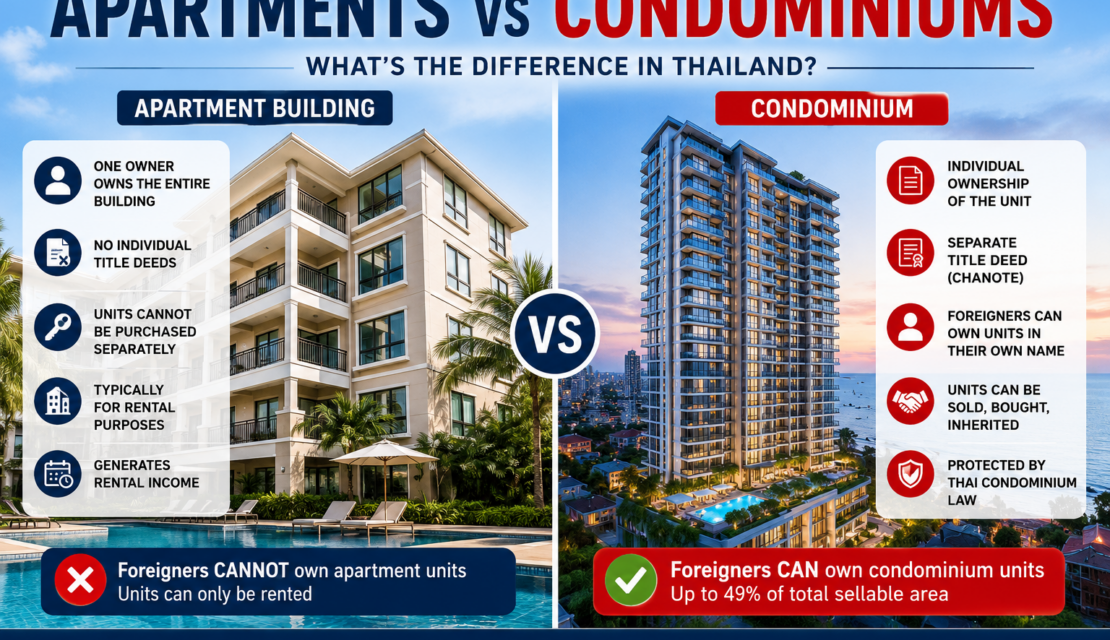
Apartments vs Condominiums in Thailand: What’s the Difference?
Many foreigners looking for property in Pattaya come across the terms “apartment” and “condominium” and assume they mean the same thing. In everyday conversation they are often used interchangeably, but under Thai law they are very different types of property.
Understanding this distinction is important, especially if you are planning to buy real estate in Thailand.
What Is a Condominium?
A condominium is a building that is officially registered under Thailand’s Condominium Act.
Each unit has its own individual title deed (Chanote), which means it can be bought, sold, inherited, or transferred independently from other units in the building.
This is the most common property type purchased by foreign buyers in Thailand.
Key Features of a Condominium
- Individual ownership of the unit
- Separate title deed for each apartment
- Foreigners can own units directly in their own name
- Units can be resold independently
- Ownership can be transferred through the Land Office
Examples of condominiums in Pattaya include:
- Copacabana Jomtien
- The Riviera Group projects
- Grand Florida
- Arcadia Beach Continental
- Centric Sea
- The Base Central Pattaya
What Is an Apartment Building?
An apartment building is a property owned by a single individual or company.
The entire building belongs to one owner, and individual units do not have separate title deeds.
Units can only be rented, not sold as separate properties.
Key Features of an Apartment Building
- One owner owns the entire building
- No individual title deeds for units
- Units cannot be purchased separately
- Typically used for long-term rentals
- Often operated as a rental business
Many serviced apartments and rental complexes in Pattaya fall into this category.
Why Does This Matter for Foreign Buyers?
Foreigners who want to own property in Thailand usually need to purchase a condominium unit.
Thai law allows foreigners to own condominium units directly in their own name, provided the foreign ownership quota in the building has not been exceeded.
Apartment units, on the other hand, cannot be individually owned because they do not have separate legal titles.
Foreign Ownership in Condominiums
A condominium project may allocate up to 49% of its total sellable area to foreign ownership.
Units within this quota can be registered directly in a foreigner’s name at the Land Office.
This is commonly referred to as a “Foreign Quota” unit.
Properties advertised as:
- Foreign Name
- Foreign Quota
- Foreign Ownership
are condominium units eligible for direct foreign ownership.
How to Verify a Property Before Buying
Before purchasing any property in Thailand, buyers should confirm:
- Whether the building is a registered condominium
- Whether the unit has its own title deed
- Whether foreign quota is available
- Whether the ownership structure matches their investment goals
A professional property agent or legal advisor can assist with due diligence before the transaction.
Conclusion
Although the terms “apartment” and “condominium” are often used interchangeably, they represent very different legal concepts in Thailand.
If your goal is to own property in your own name, a condominium unit within the foreign ownership quota is usually the most straightforward and secure option.
Understanding this distinction can help buyers avoid confusion and make informed investment decisions when purchasing property in Pattaya.